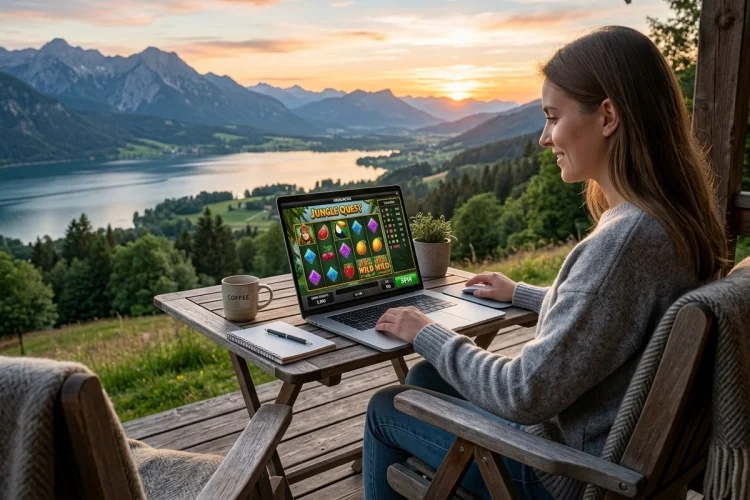
Online slots can look confusing when you open one for the first time. The screen may contain reels, paylines, wild symbols, bonus meters, and several buttons that are not immediately explained.
Demo mode offers an easier starting point. It gives you virtual credits and lets you explore the same basic game mechanics without making a real-money deposit.
You can inspect the paytable, test different pretend stake sizes, and discover whether the game is actually enjoyable.
This guide explains how to Play Free Slots in demo mode step by step. It also covers what free play can teach you, what it cannot predict, and how to avoid developing unrealistic expectations from virtual results.
Find a Reliable Demo Game
Begin with the official website of an established game provider. Play’n GO and Pragmatic Play maintain online catalogues containing numerous titles with free-play or demo options.
Select a game and look for a button labeled “Play Demo,” “Play Free,” or “Play Now.” Availability may vary according to your device, age, browser settings, and location.
A genuine provider-hosted demo should not require a casino deposit. Some pages may display an age confirmation or cookie notice before launching the game.
Confirm That the Balance Is Virtual
Once the demo loads, check the balance shown on the screen. It may display dollars, coins, or credits, but the amount is simulated and cannot normally be withdrawn.
For example, you might start with $1,000 in virtual funds. This does not mean the provider has given you $1,000. It is simply a practice balance used to demonstrate how the slot operates.
When the balance reaches zero, some demos allow you to refresh the page or restart the game.
Learn the Basic Controls
Find the spin button, stake selector, information panel, sound settings, and balance display. Do not begin by clicking the largest possible virtual stake.
Start with the lowest setting and complete a few slow spins. Watch how much is removed from the balance and how any winning amount is added back.
Check the Game Speed
Some games use quick animations, while others include longer feature sequences. Demo mode lets you decide whether the pace feels comfortable before spending any money.
It is also a useful way to test whether the controls remain readable on a smartphone.
Read the Paytable Before Spinning
The paytable explains how winning combinations form. A traditional game may use fixed paylines, while newer titles may award clusters or matching symbols anywhere on the grid.
The information screen should also explain wilds, scatters, free spins, multipliers, and bonus triggers. Regulated games should provide accessible rules and information about the likelihood of winning.
Starburst, for example, uses five reels, three rows, and an expanding wild that can trigger a respin. NetEnt provides an official demo and lists a theoretical RTP of 96.08%.
Understand RTP and Volatility
Return to player, or RTP, represents the percentage a game is theoretically designed to return across extensive play. It is not a promise for one session.
A slot displaying 96% RTP will not necessarily return $96 after you virtually wager $100. Short sessions can finish far above or below the theoretical average.
Volatility describes how prizes tend to be distributed. Lower-volatility games generally focus on smaller, more regular outcomes, while high-volatility games may produce longer quiet periods and less frequent larger prizes. Actual results can vary because of randomness.
Practice One Feature at a Time
Choose a simple slot when you are new. Learn paylines and wilds first, followed by scatters and free spins.
Once those mechanics make sense, try a cluster or cascading-reel game. Do not jump directly into a title containing several jackpots, bonus meters, collectors, and changing grids.
After ten minutes, pause and explain how the game works. When you cannot describe the bonus trigger or winning system, return to the paytable.
Remember the Limits of Demo Mode
A large virtual win does not predict a future cash result. Demo mode shows how features operate, but every separate spin remains random.
Do not search for patterns or assume the slot becomes more likely to pay after several losses. A random game does not remember that your virtual balance has fallen.
Free play is most useful as an educational and entertainment tool-not as a system for identifying when to bet real money.
Learning to Play Free Slots in demo mode is straightforward. Choose an official provider, confirm that the balance is virtual, locate the controls, and read the paytable before spinning. Start with a simple game and study one feature at a time.
Use RTP and volatility to understand the mathematical design, but never treat them as short-term predictions. Demo winnings cannot be withdrawn, and successful practice rounds do not guarantee future results.
Open one trusted browser demo, set a short session limit, and see whether you can clearly explain the rules before moving to a more complicated title.